Governor Ivey Signs Bills to Enhance Alabamians’ Health and Healthcare Delivery
MONTGOMERY – Governor Kay Ivey has signed several bills into law this session to improve the availability and delivery of healthcare services for all Alabamians. She also signed a bill to encourage people using Supplemental Nutrition Assistance Program (SNAP) benefits to make healthier choices in their food purchases.
“In December, I announced Alabama’s participation in a new Trump Administration program funded by the ‘One Big Beautiful Bill’ passed by Congress to expand rural healthcare delivery,” said Governor Ivey. “Not wasting a moment, I worked with legislative leaders this session to remove legal barriers to ensure healthcare providers are able to work together to improve healthcare delivery in our rural areas. We have also freed first responders to deliver more life-saving services during ambulance calls, and we have joined other states in streamlining approval of out-of-state physician assistants to practice in Alabama. We are promoting healthier diets for Alabama SNAP beneficiaries by restricting the purchase of sugary foods that contribute to obesity and diabetes. These efforts along with several other pieces of legislation lay a solid foundation as we partner with the Trump Administration in improving rural healthcare delivery to better meet the needs of the public.”
Healthcare priorities for Governor Ivey this session included:
Alabama Rural Health Antitrust Immunity Act (HB605)
Provides limited antitrust protections to allow collaboration among healthcare providers to maximize efficiency and to sustain and expand healthcare services in rural areas. Activities that may be authorized by HB605 include use of shared clinical, administrative and support services; coordinated staffing arrangements; joint quality improvement initiatives; and purchase and use of shared facilities and equipment.
Alabama Physician Assistant Licensure Compact (HB156)
Streamlines state license approval of out-of-state physician assistants to practice in Alabama, attracting more medical professionals to serve patients in the state. Alabama becomes the 24th state to approve this compact, joining Tennessee and Arkansas in the South.
Treat in Place (SB269)
Allows ambulance operators to be paid for medical services they perform on-site. Presently, Emergency Medical Services (EMS) providers are not paid unless they transport a patient to the hospital, even if the patient does not require full emergency department or inpatient care. Removing the patient-transport mandate for service reimbursement is expected to increase the availability of EMS care and reduce patient overcrowding in hospitals.
Expansion of EMS Tuition Reimbursement Program (HB116)
Expands the EMS training tuition program by adding the Alabama Department of Public Health’s six regional Emergency Medical Services offices to places offering eligible instruction. Graduates of EMS training would be required to perform a two-year service commitment to qualify for tuition reimbursement.
Accepting Military Training for EMS Licensure (HB182)
Requires the Alabama Department of Public Health to accept an applicant’s education, training and experience gained during U.S. military service as credit toward meeting state EMS license requirements.
Eliminating Breast Cancer Examination Co-Pay (HB300)
Beginning January 1, 2027, no health benefit plan sold in Alabama will be able to impose a copayment or similar expense on an insured person for a supplemental breast examination or a diagnostic breast examination.
Eliminating Prostate Cancer Screening Co-Pay for Older and High-Risk Men (SB19)
Beginning October 1, 2027, no health benefit plan sold in Alabama will be able to impose a copayment, deductible, or similar expense on an insured person for prostate screening for men older than 50, or men at “high risk” who are older than 40.
Ensuring Healthy Choices for SNAP Benefits (SB57)
Alabama joins 22 other states in requesting a waiver from the U.S. Department of Agriculture to prohibit SNAP benefits from being used to purchase high-sugar candies and sodas.
Indoor Vaping Restrictions for Public Places (SB9)
Extends the current ban on smoking cigarettes, pipes and cigars in a public space or in public meetings to include the use of a vaping device, electric cigarette or any other “electronic nicotine delivery system”, whether the e-liquid contains nicotine, THC or another substance.
Governor Ivey and the Alabama Legislature also made appropriations for the Rural Health Transformation Program. The Centers for Medicare and Medicaid Services this year awarded $203.4 million to Alabama, for projects the state proposed to improve healthcare for rural residents.
These common-sense measures will improve the health of many Alabamians. They also represent big steps in the state’s effort to expand rural healthcare access.
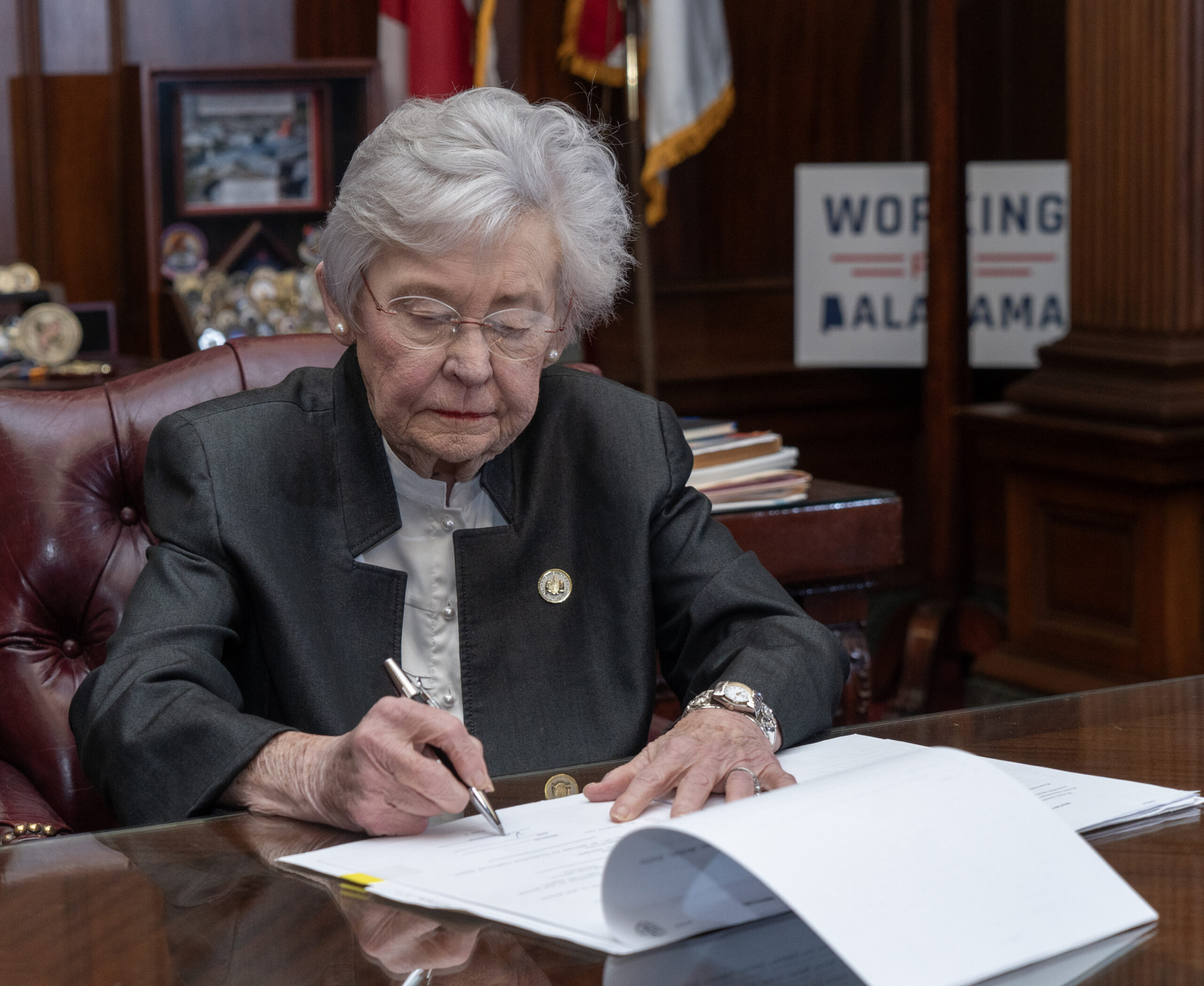
A photo of Governor Ivey signing SB57 is attached.
###
Provided by the Office of the Governor of Alabama | governor.alabama.gov